
Advanced storage and dosing system for sodium hydroxide (NaOH) for RAS aquaculture in Norway

Jakub Tondera, Expert in the field of plastic chemical tanks
Maintaining high water quality in recirculating aquaculture systems (RAS) requires constant monitoring of numerous physicochemical parameters. One of the key agents used in this process is sodium hydroxide (NaOH), whose primary function is to regulate and stabilise pH levels.
Sodium hydroxide enables stable environmental conditions to be maintained. In many RAS systems, the NaOH dosing process is automated, i.e. a controller activates the solution feed when the pH falls below a set range (usually 6.8–7.5, depending on the fish species and farming technology). Any failure during the storage, transfer or dosing of these substances can quickly result in production losses.
In a project carried out for Eyvi AS, a global leader in the design, supply and servicing of advanced land-based fish farming systems, we implemented a NaOH filling, storage and dosing system with control automation for the operation of a fish farm with a RAS system.
During the project, we faced typical challenges resulting from both the specific nature of the medium and the region itself. These included the risk of sodium hydroxide crystallisation at low temperatures, i.e. below 17°C, and the need for seamless integration with the farm’s existing automation systems. An additional challenge was the formal organisation of the trip and transport of goods to Norway, as well as the need for our team to adapt to Scandinavian weather conditions.
The comprehensive implementation for Eyvi AS is an example of the successful implementation of advanced chemical-resistant systems in the demanding Scandinavian environment, taking into account strict technical and logistical standards.
NaOH filling, storage and dosing installation without compromise
The investor was looking for a partner capable of implementing a sodium hydroxide filling, storage and dosing installation on a ‘design and build’ basis. This was to ensure a single point of contact and full responsibility for the entire process. The key issues and requirements focused on ensuring comprehensive delivery, high standards of implementation and the reliability of the entire system.
The investor’s key requirements included:
- ensuring complete tightness and safety of the installation operating with concentrated 50% NaOH,
- designing a system resistant to low temperatures and the risk of medium crystallisation,
- integration of all devices with the existing farm automation and the possibility of monitoring in the SCADA/BMS system,
- use of chemical-resistant components with a long service life and high standard of workmanship,
- guaranteeing trouble-free operation of dosing pumps and continuity of the pH regulation process,
- minimising the risk of leaks through the use of double-walled pipelines and secured working spaces,
- implementation of the project in a ‘design and build’ formula, including design, production, logistics, assembly, testing and commissioning,
- compliance of the design and assembly work with local Norwegian regulations and health and safety standards.
The delivered system for filling, storing and dosing 50% NaOH sodium hydroxide lye included:
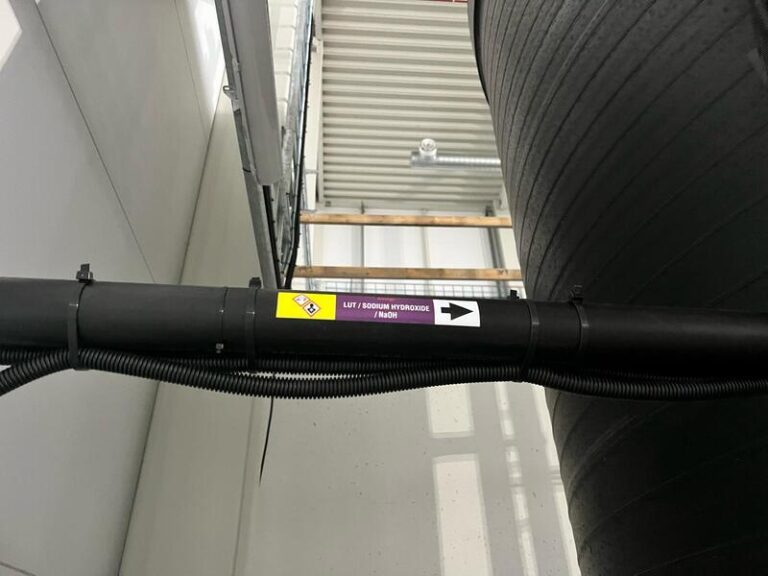
- a filling and unloading system for tankers carrying 50% NaOH working fluid, made of PEHD PE100 pipes and fittings as a double-walled pipeline,
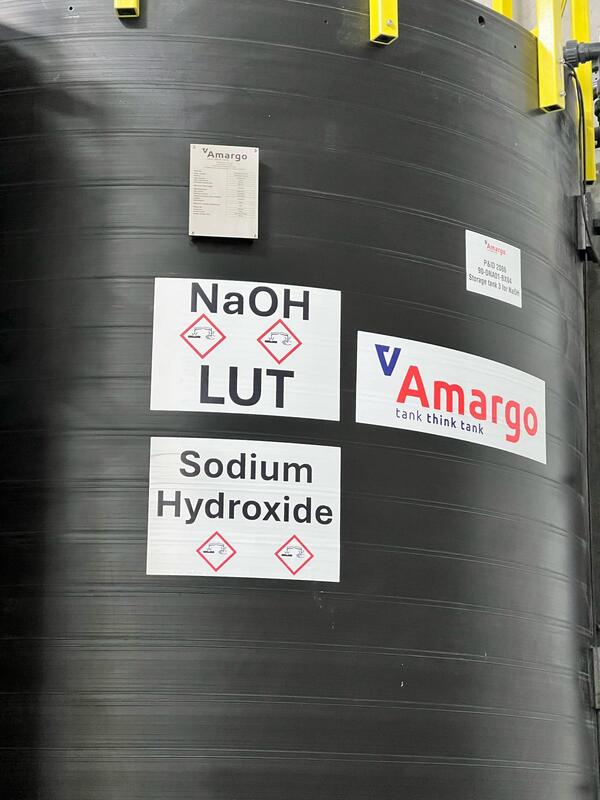
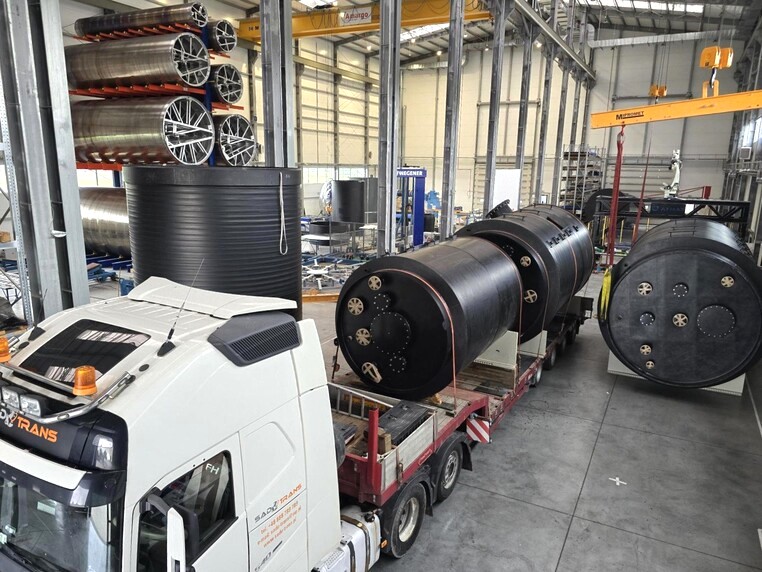
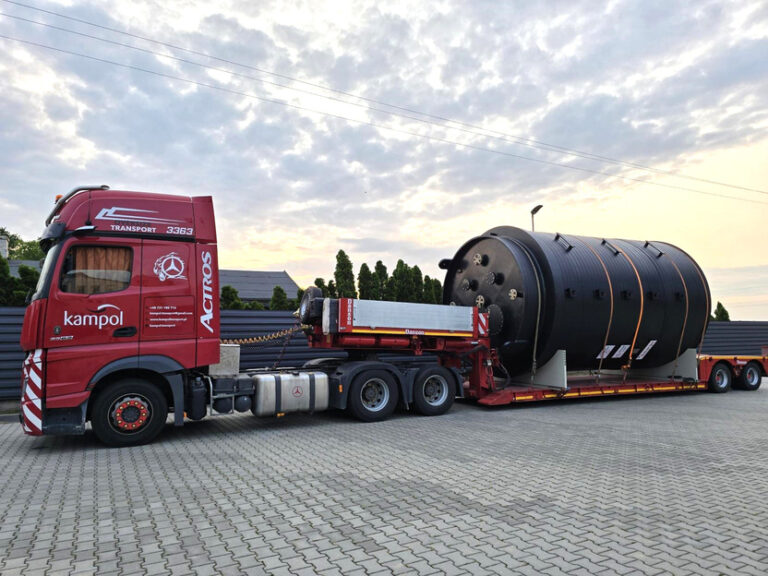
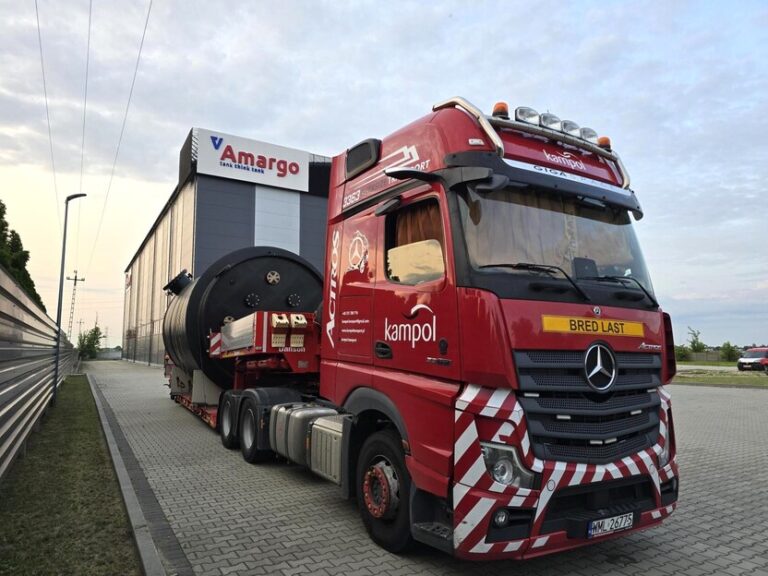
- 3 cylindrical storage tanks with a total capacity of 16.54 m³ each, made of PE100 at the Amargo production plant and transported to Norway,
- a sodium hydroxide dosing installation with automatic control of pump operation and tank levels.

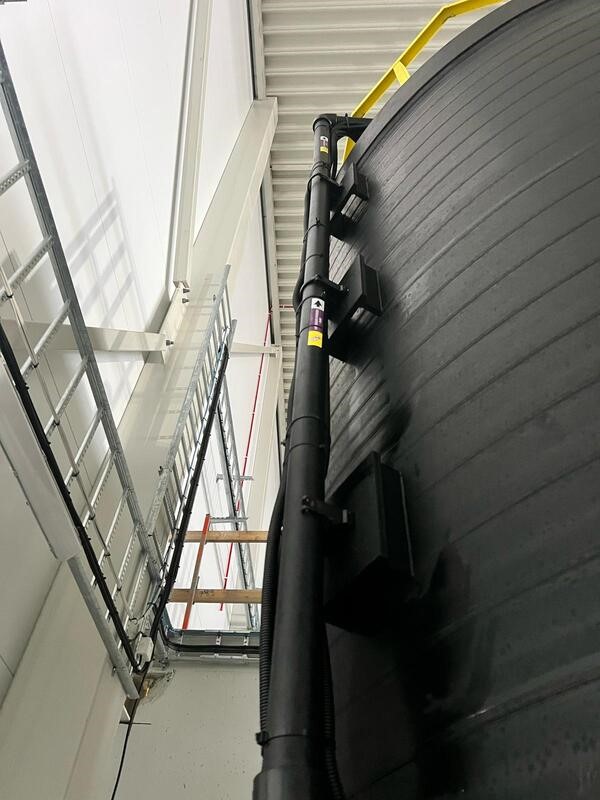
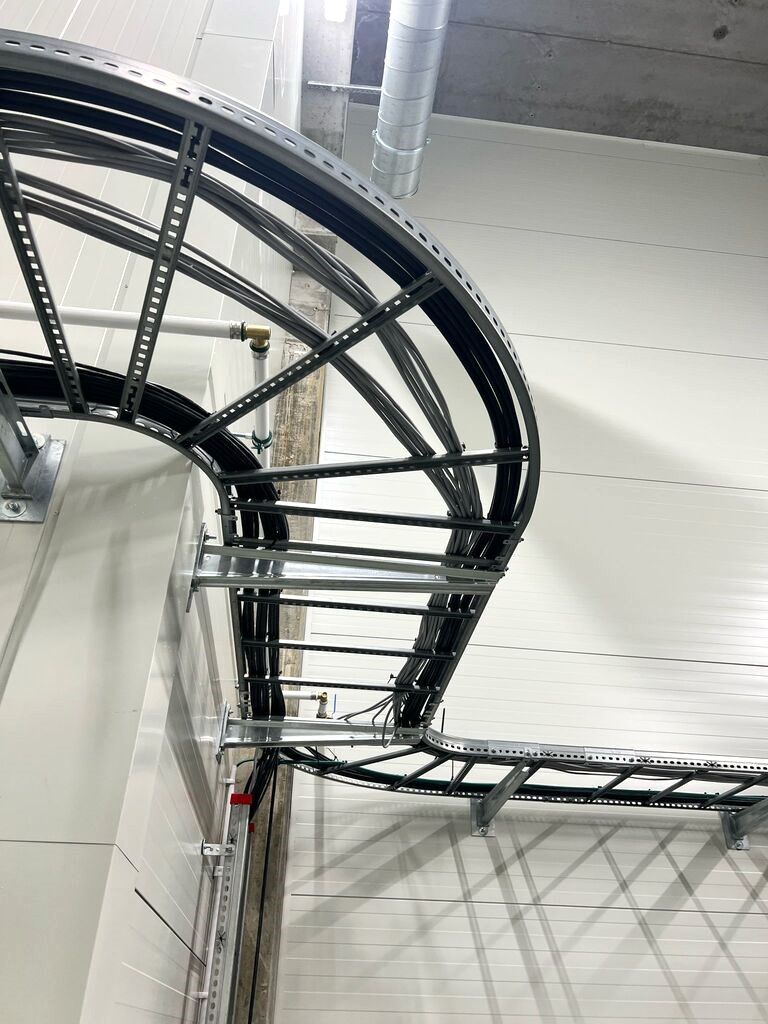
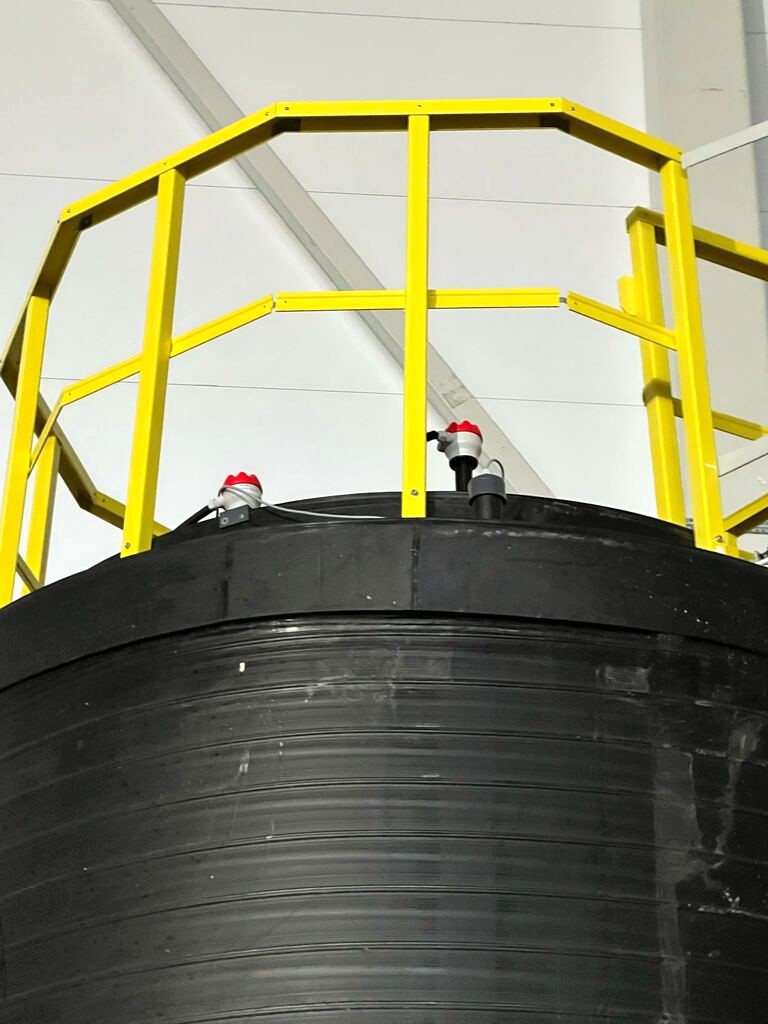
The implementation of the project in Norway involved a few specific challenges that required the use of dedicated technical and organisational solutions.
Low temperatures and the risk of medium crystallisation
One of the most critical challenges, especially in Scandinavian conditions, is the risk of crystallisation of concentrated sodium hydroxide (NaOH 50%) at temperatures below approximately 17°C. At the same time, it is necessary to ensure the continuity of the installation’s operation despite unfavourable conditions. Crystallisation of the medium could lead to blockages and failure of the entire dosing system.
To maintain full system functionality, we have implemented thermal insulation and heating systems for tanks, pipelines and filling cabinets. These solutions ensure stable operating conditions regardless of the ambient temperature.
Integration with existing farm automation
Another important requirement was the integration of the new dosing system with the existing farm management system. Full control and monitoring of the dosing process are essential for effective management of the entire infrastructure.
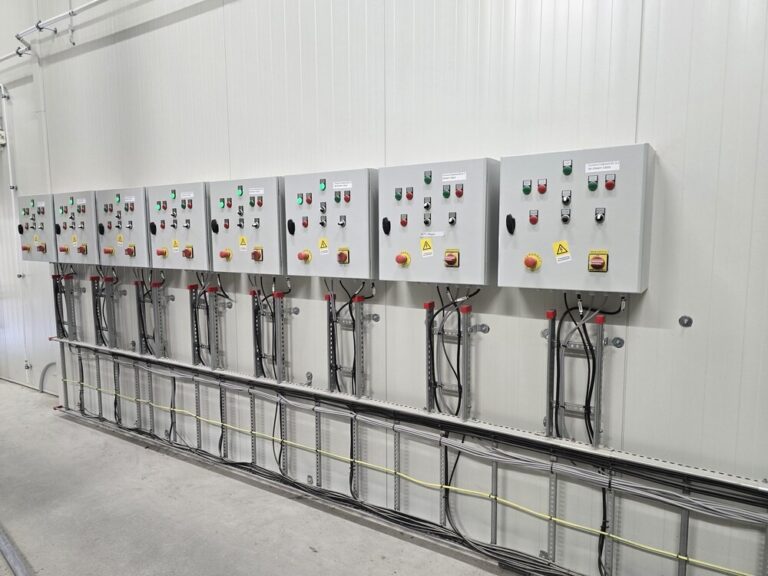
The control systems (electric cabinets) are equipped with communication modules enabling full, two-way data exchange with the SCADA/BMS master system. This allows for ongoing supervision of pump operation, tank levels and process parameters, as well as remote diagnostics.
Ensuring system reliability
Due to the critical importance of continuous medium dosing for maintaining water parameters in the RAS system, system reliability was a priority.
To this end, we used redundant pumps and advanced safety fittings in the dosing cabinets. These include pressure dampers, constant pressure valves and safety valves, which minimise the risk of failure and downtime.
High standard of workmanship and longevity of the installation
The requirement for longevity and resistance to aggressive chemical environments was key to ensuring the durability of the tanks and installations.
The construction of storage tanks and installations from certified chemical-resistant materials (PE100 polyethylene) and a designed service life of 20 years guarantees high resistance to concentrated sodium hydroxide. The tanks were manufactured using AmargTank ClassicWeld® technology, in accordance with DVS guidelines, which confirms the highest quality and durability of the joints.
Logistics implementation and regulatory compliance
Organisational challenges included the need to organise logistics, assembly and full compliance with local labour laws and Scandinavian regulations.
Amargo® has a registered branch in Norway with a NUF tax number, ensuring full compliance with local requirements and regulations and facilitating on-site operations.
Technology, safety, environment: the pillars of effective implementation of a chemical-resistant system for RAS
The implementation of a chemical-resistant system for RAS requires a combination of advanced technology, an uncompromising approach to safety and responsible management of environmental impact. The implemented solutions, ranging from precisely designed tanks and pipelines made of chemical-resistant materials, through heating systems that eliminate the risk of NaOH crystallisation, to advanced automation with full integration with higher-level control systems, create a coherent, safe and long-lasting infrastructure.
This approach minimises operational risk, protects the farm’s biological resources and reduces potential environmental impact. Unambiguous quality standards and hermetic structural safeguards (double-walled pipelines, dosing cabinets, protective fittings) ensure not only the safety of people and installations, but also compliance with the stringent standards in force in Scandinavian countries.
By integrating technology, safety and environmental responsibility, an installation has been created that supports production continuity, reduces operating costs and enhances the stability of the entire RAS system, giving the operator an advantage in an industry with growing quality and regulatory requirements.
Benefits for the target customer: fish farm, in a nutshell
- Avoiding production losses by minimising the risk of failure of a critical component of the RAS system, which protects high-value fish farming.
- Optimisation of operating costs thanks to precise dosing of the medium and a 20-year design life of the installation.
- Increased environmental safety thanks to leak protection (collection tray) and avoidance of costs associated with environmental penalties and cleaning costs resulting from potential failures.
- Strengthening the farm’s market position by implementing solutions that comply with European and Norwegian technical standards.
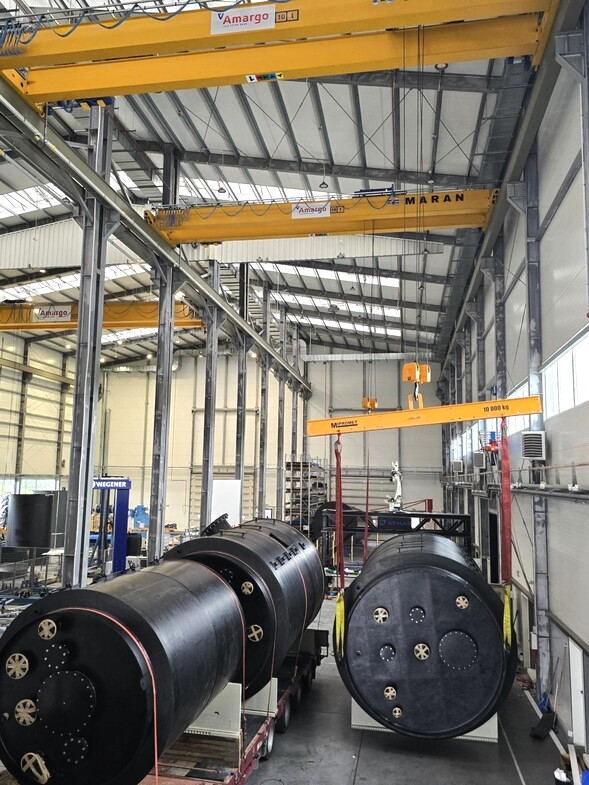

The advantage high-risk projects need: one contractor, full control, global expertise
Amargo’s proposal is based on a complete value chain that covers all stages of project implementation: from concept and design, through production (including the use of our own advanced machinery), to logistics, assembly, commissioning and service. This comprehensive approach solves the problem of complexity while minimising risk and the need for coordination on the customer’s side.
In addition, our experience and expertise are backed by over 20 years in the industry and a proven ability to deliver international projects, ensuring that high standards of execution are met. In the context of foreign implementation, we have a registered branch in Norway (NUF), which enables us to assemble in full compliance with local law and Scandinavian regulations, thus eliminating the challenges associated with formalities.
A key advantage is the single point of contact (SPOC) principle. As the sole entity responsible for the entire implementation, Amargo significantly simplifies the decision-making and service process, ensuring full responsiveness and continuity of service. This means quick responses to requests and questions, efficient decision-making and action, flexible adaptation to changing needs, and no ‘passing the buck’ between different entities.
Customer Service Office
Inquiries regarding the scope of the product range Monday – Friday 8:00 a.m. – 4:00 p.m
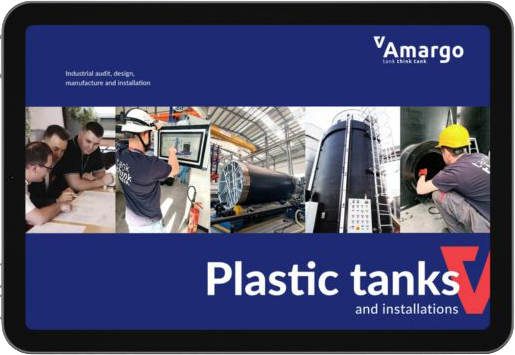
Check how we can help you
Get to know the full Amargo offer: industrial audit, design, manufacture and installation
*The data administrator is AMARGO sp. z o. o. sp. k. with its registered office in Koprki, ul. Jaśminowa 16, 05-850 Ożarów Mazowiecki, e-mail address: ado@amargo.pl. The data provided in the above form will be processed in order to send the file with the Amargo guide, due to the legitimate interest of the administrator in responding to the submitted request. If you wish, the e-mail address will also be processed for the purpose of delivering the newsletter, i.e. providing the ordered service. You have certain rights regarding the processed personal data, i.e. access, rectification, deletion, restriction, transfer, objection to processing, and lodging a complaint to the appropriate authority (President of the Personal Data Protection Office, ul. Stawki 2, 00-193 Warsaw) . Providing data is voluntary, but necessary to fulfill a specific purpose. More information about the processing of personal data is included in the Privacy Policy (only in Polish).